
What Is Craniosacral Therapy and What to Expect
- Health Harmony
- Aug 30
- 5 min read
A holiday in Ibiza or Mallorca can be beautifully full - late dinners, travel, sun, swimming, celebration, and perhaps a little less sleep than usual. When your body begins asking for stillness, a deeply gentle treatment can feel more nourishing than another high-intensity wellness appointment. So, what is craniosacral therapy? It is a light-touch, hands-on therapy intended to support relaxation and help the body settle into a calmer, more balanced state.
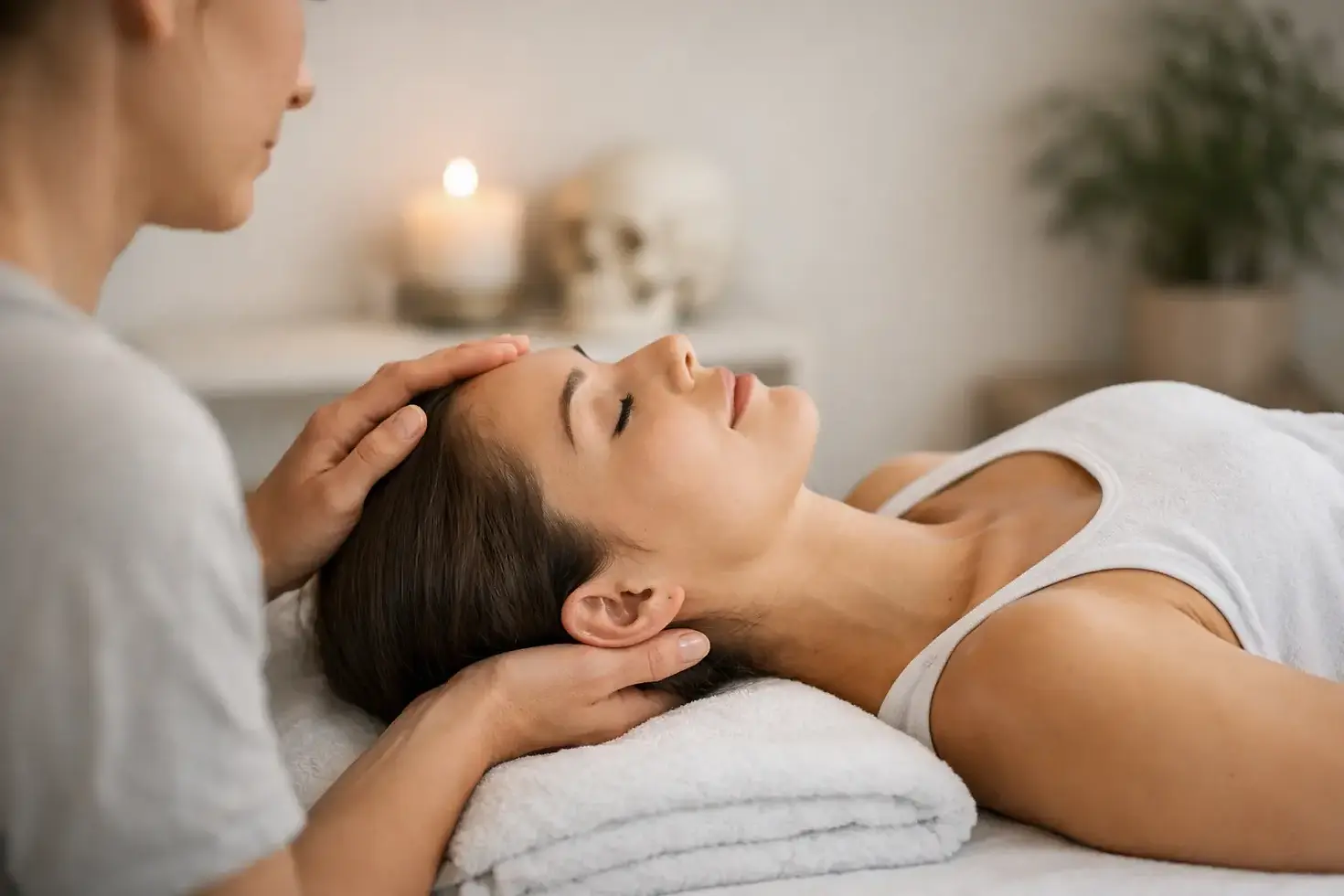
Rather than using the long strokes or firm pressure of a traditional massage, a craniosacral practitioner places their hands softly at areas such as the head, neck, spine, sacrum, or feet. The experience is quiet, personal, and often profoundly restful. For guests who feel overstimulated, emotionally tired, physically tense, or simply ready to pause, it offers an invitation to come back to the body.
What Is Craniosacral Therapy?
Craniosacral therapy, sometimes written as cranio-sacral therapy, grew from osteopathic traditions. It works with the concept that the brain, spinal cord, surrounding membranes, and the fluid around the central nervous system form a connected system. Practitioners use very gentle contact to assess subtle movement and restrictions, then support the body’s own capacity to release tension and regulate.
A session does not involve forceful manipulation or trying to "fix" you. The practitioner listens through their hands, allowing the treatment to unfold at a pace that feels safe for your nervous system. Some people describe a feeling of warmth, spaciousness, gentle pulsing, or drifting into a deeply relaxed state. Others simply notice that their breathing slows and their thoughts become quieter.
The philosophy behind craniosacral work is holistic: physical holding patterns can be shaped by stress, injury, fatigue, emotion, and the pace of daily life. A skilled practitioner considers the whole person rather than isolating one sore area. That makes this therapy especially appealing when you cannot quite explain what feels off, but know you need restoration.
What Happens During a Session?
Your practitioner will begin with a brief conversation about how you are feeling, what you hope to receive from the session, and any relevant health history. You remain fully clothed, so choose soft, comfortable clothing whenever possible. Depending on your setting and comfort, treatment may take place on a massage table, a yoga mat, or another supportive surface prepared in your villa, hotel suite, yacht, or retreat space.
The touch is typically very light. Your practitioner may rest their hands beneath your sacrum, around your head, along your spine, or at the shoulders and feet. There is no need to perform, stretch, or direct the experience. Your only task is to get comfortable, breathe naturally, and let your body respond in its own way.
The session may include quiet pauses. These are intentional, not empty. Craniosacral therapy is less about doing more and more about creating the conditions for your system to soften. Some clients fall asleep. Some experience a release of emotion, such as unexpected tears or laughter. Some feel little during the appointment but later notice improved ease, sleep, or a sense of being more grounded.
Responses vary, and none is a measure of whether the session was successful. Your experience is your own.
Why People Choose Craniosacral Therapy
This treatment is often chosen by people who want a quieter alternative to deep-tissue bodywork, especially during periods of stress, recovery, or emotional change. The light touch can feel comforting when stronger massage would be too much. It can also complement a broader wellness plan that includes massage, osteopathy, physiotherapy, yoga, breathwork, or meditation.
Clients may book craniosacral therapy when they are experiencing tension around the jaw, neck, or shoulders; difficulty winding down; disrupted sleep; a sense of nervous-system overload; or fatigue after travel. Others choose it simply because they want to feel held, rested, and reconnected to themselves before a wedding, a retreat day, a yacht charter, or a busy family holiday.
It is worth holding the benefits with honesty and care. Many people report feeling calmer and more comfortable after a session, but scientific evidence for craniosacral therapy remains limited and mixed for many specific medical conditions. It should not replace diagnosis, medical treatment, mental health care, or urgent care. Think of it as supportive, complementary wellness care rather than a cure.
Craniosacral Therapy Compared With Massage and Osteopathy
Massage therapy generally works with muscles and soft tissues through strokes, kneading, stretching, and pressure. It can be ideal for muscular tightness, post-flight heaviness, or the satisfying feeling of a full-body reset. Craniosacral therapy is subtler. It uses minimal pressure and focuses more on stillness, nervous-system settling, and the body’s internal rhythms.
Osteopathy may include a wider clinical assessment of mobility, posture, joints, and tissues. Depending on the practitioner and your needs, it can involve hands-on techniques that range from gentle mobilization to more direct structural work. Craniosacral therapy can sit alongside osteopathy, but it is not the same appointment.
There is no universal “best” choice. If your calves and back are aching after a long day on the water, massage may be the more direct fit. If you feel sensitive, frazzled, or unable to switch off, craniosacral therapy may offer a gentler path. A thoughtful wellness concierge can help you select or combine treatments according to how you feel that day.
Is It Right for You?
Craniosacral therapy is usually sought for its gentle nature, but gentle does not mean appropriate for every circumstance. Share your health history honestly before booking, including recent surgery, head injury, neurological symptoms, pregnancy concerns, severe osteoporosis, blood-clotting issues, or any condition for which you are under medical care. Your physician is the right first call for severe pain, sudden neurological changes, fever, fainting, chest pain, or a new unexplained symptom.
It is also helpful to arrive without a rigid expectation. This is not a treatment that promises a dramatic result on command. Its value often lies in the quality of attention: quiet, skilled touch and the rare opportunity to rest without needing to organize, respond, or achieve anything.
For some, one session feels like a meaningful reset. For others, the effects are more subtle, or a small series creates more continuity. It depends on your goals, stress level, physical history, and how your body responds. A certified practitioner should welcome your questions, respect your boundaries, and adapt the session to your comfort.
Creating a Restorative Experience Where You Are
The setting matters. A craniosacral session can be especially beautiful when it comes to you, rather than adding another journey to your schedule. At Health Harmony Ibiza, a certified practitioner can prepare a calm, fully equipped treatment space in your villa, hotel, yacht, or retreat location, so the restorative feeling does not end with a drive across the island.
Afterward, give yourself a little room in the day. Drink water, have a light meal if you need one, and avoid rushing straight into a loud plan or demanding conversation. You may feel clear and energized, sleepy and soft, or simply more present. Each response deserves the same gentle respect.
Sometimes the most luxurious part of wellness is not intensity or extravagance. It is being met exactly where you are, with quiet hands, unhurried attention, and enough space for body, mind, and soul to find their own inner harmony.



Comments